
Municipality
3 minute read
"Resource recovery and efficiency are at the core of our operations – transitioning to renewable fuel was a natural step."
Anna Boo, Sustainability Strategist at PreZero
Highlights
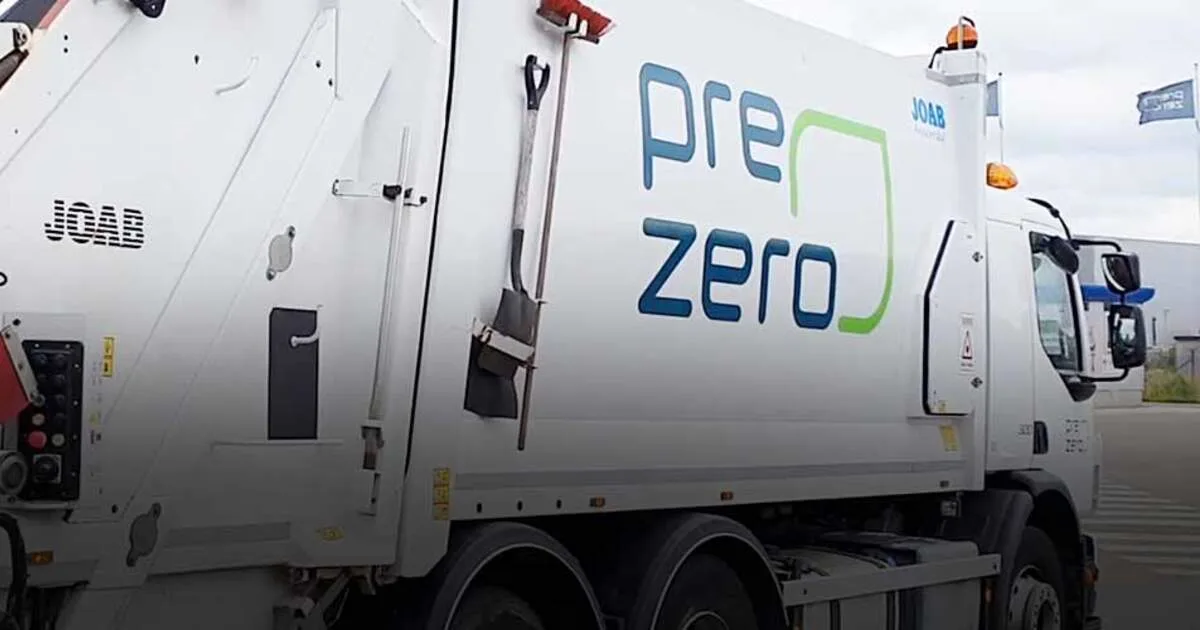
The recycling and waste management company PreZero traces its roots back to the 1880s, when they collected waste using horse and cart under the name Sellbergs. Today, with over 1,100 employees across 55 locations in Sweden, they focus on resource recovery and circular material flows. We spoke with Anna Boo, Sustainability Strategist at PreZero.
How would you describe what you do?
Anna explains: "We are a waste management and resource recovery company focusing on renewable solutions. We collect residual waste from our customers and convert it into valuable resources. We do this through material recycling so that resources can be reused. What cannot be material-recycled is recovered as energy in combined heat and power plants. Today, we recover approximately 92% of all materials we collect, which is why we view them as resources rather than waste."
You have two primary business areas, correct?
Anna: "Yes, collecting residual materials is what we call 'upstream'. This includes municipal household waste contracts, as well as waste from the construction industry and retail sector. 'Downstream' involves supplying sorted materials, such as paper and metals, to manufacturing industries."
Transport is a major part of your operations. How do you work to reduce transport emissions?
Anna elaborates: "Our operations require extensive transport. We operate around 650 trucks ourselves and hire subcontractors for approximately 200 additional vehicles. We address our carbon footprint through fleet efficiency, driver training in fuel-efficient driving, route optimization, electrification where suitable, and the use of renewable fuels."
You transitioned to Neste MY Renewable Diesel™ (HVO100) in 2021. What challenges did this decision address?
Anna explains: "Transport accounts for a significant share of our greenhouse gas emissions. Beyond route optimization, we needed an effective solution to replace fossil fuels. Switching to Neste MY Renewable Diesel™ enabled us to rapidly transition fuel consumption in our existing fleet without requiring modifications to engines or fueling infrastructure."
What role does this play in your overall climate strategy?
Anna: "A very important one. In 2021, we decided to operate our diesel vehicles on HVO100 where feasible. By spring 2022, 95% of the fuel we purchased was HVO. This allows us to significantly reduce our greenhouse gas emissions compared to fossil diesel – and we achieved this immediately using our existing vehicles."*
*) Neste MY Renewable Diesel™ is sold in the EU as an HVO fuel complying with the sustainability criteria set out in the EU Renewable Energy Directive (EU RED III). By using Neste MY Renewable Diesel™, greenhouse gas (GHG) emissions can be reduced by up to 90% over the fuel’s life cycle compared to fossil diesel. The exact emission reduction varies depending on the region-specific legislation/calculation methodology and the raw material mix used.
What was decisive when choosing Neste MY Renewable Diesel™?
Anna: "Fuel availability and operational reliability were critical. Operating across 55 locations from Malmö to Umeå, we needed a solution with reliable supply along our transport routes. Furthermore, we required the same cold-weather performance and reliability as conventional diesel."
What is the feedback from your drivers and customers?
Anna: "Operations run smoothly, and drivers refuel exactly as before. Many of our customers, particularly in the public sector and organizations with strict GHG Protocol reporting requirements, demand transport with lower greenhouse gas impact. Demonstrating a tangible transition to renewable fuel provides confidence and accuracy in their reporting."