Aviation, News and insights
4 minute read
A practical pathway to reducing the carbon footprint of global logistics
With the transport sector accounting for 20% of global CO₂ emissions – and freight transport making up nearly half of that total – the logistics industry is under increasing pressure to reduce its carbon footprint. The good news? Renewable solutions are available today, and at scale.
In a recent expert webinar hosted by Neste, experts from DHL Express, ISCC (International Sustainability and Carbon Certification) and Neste came together to outline a practical roadmap for businesses committed to reducing logistics emissions today. The consensus was clear: the combination of renewable fuels and rigorous verification is allowing businesses to reduce the carbon intensity of their transport directly at the source: cargo transport.
The business driver: Sustainability as a differentiator
The conversation began by dismantling the myth that sustainability is purely a regulatory burden for businesses. As Leendert van Delft, VP Global Sales Programs at DHL Express, highlighted, it is now a critical business driver.
Data presented during the session revealed a dramatic shift in buyer behavior: 88%* of customers are more likely to be loyal to a company that supports environmental issues, and 77%* of buyers are willing to pay more for a sustainable product.
"We are seeing a fundamental change in the market," said van Delft. "Sustainability is no longer a 'nice to have' – it is a license to operate. With 50% of buyers stating that environmental concerns impact their purchasing decisions, companies that fail to act risk being left behind."
Renewable fuels provide the solution
While electric and hydrogen technologies hold promise for the long term, the already available solution for transport lies in renewable fuels. Jörg Hübeler, Head of Global Accounts at Neste, emphasized the "drop-in" nature of these solutions.
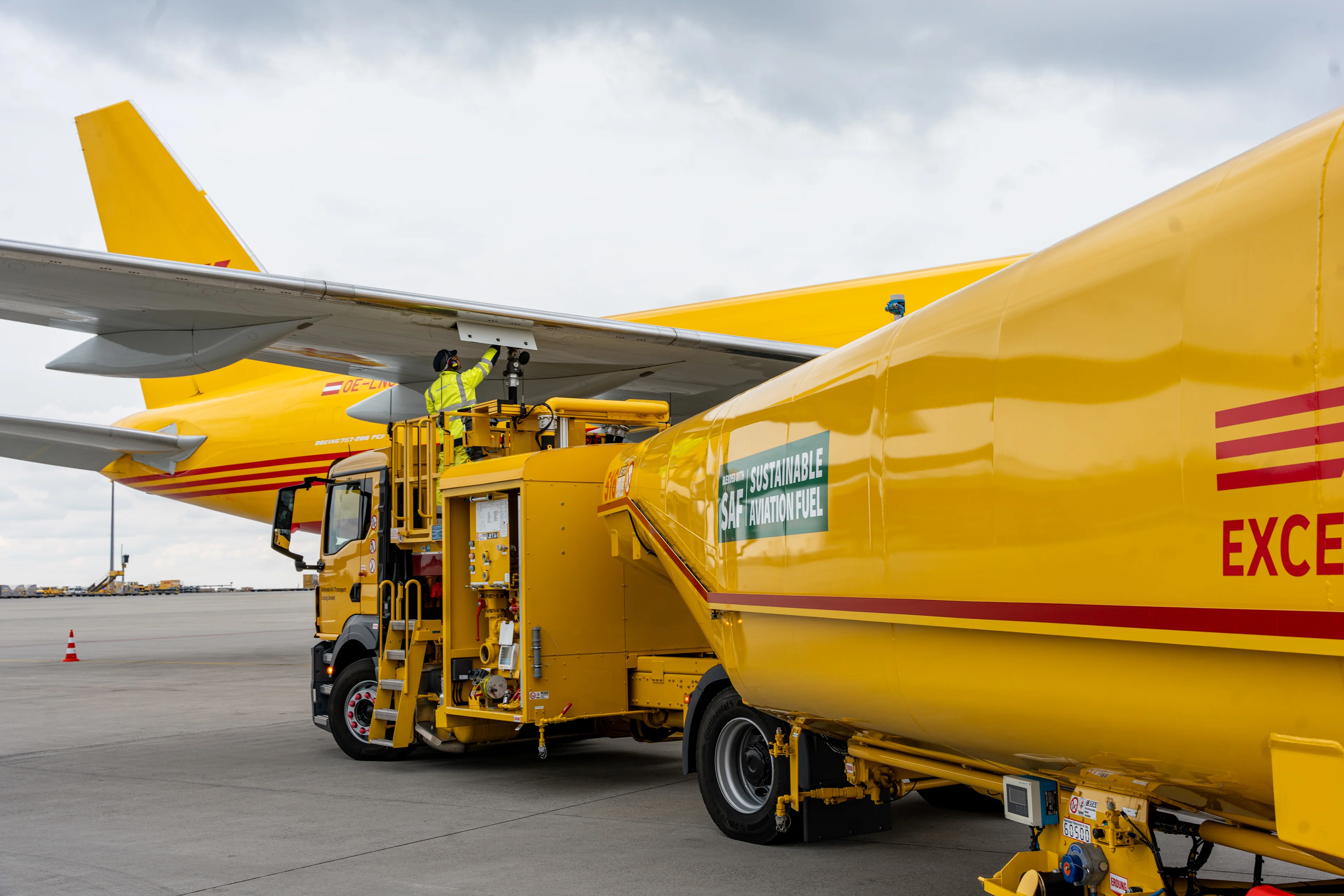
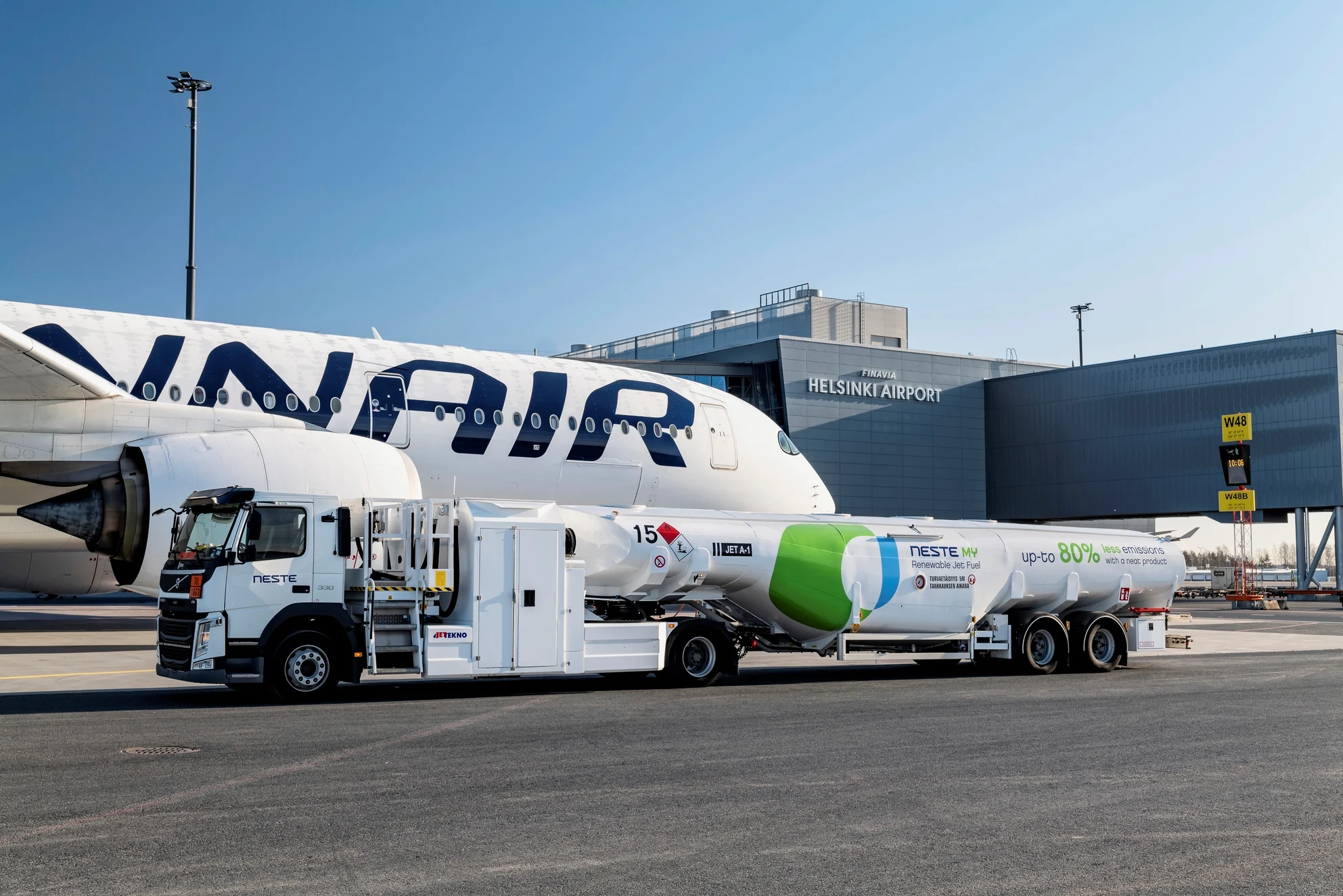
“Neste MY Sustainable Aviation Fuel™ (SAF) and Neste MY Renewable Diesel™ (HVO100) are drop-in solutions, meaning they can be used in existing aircraft and trucks without modification, as they are chemically similar to their fossil counterpart. This allows for immediate deployment across global supply chains.”
"We do not have the luxury to wait until 2040 or 2050," urged Hübeler. "We need solutions that work with the infrastructure we have today. The capacity is here, and it is growing – from Singapore to Rotterdam to the U.S."
Working towards value chain climate targets: DHL GoGreen Plus
Perhaps the most significant shift discussed was the move from "offsetting" to "insetting." Offsetting involves compensating for emissions already emitted by investing in external projects, like reforestation. While supporting broader climate goals, it does not reduce the actual emissions of the logistics sector.
Insetting on the other hand, is about directly addressing climate impact within a company's own supply chain, with a particular focus on scope 3 emissions. Van Delft detailed how DHL GoGreen Plus is enabling the shift from compensating to reducing. By purchasing renewable fuels, DHL enables customers to address emissions directly within their own supply chain.
"It is about taking responsibility for the emissions where they actually happen. With GoGreen Plus, we are empowering our customers to say, 'I want my shipment to have less climate impact.' We then invest in the corresponding amount of SAF or renewable diesel. It’s not just buying a credit; it’s changing the fuel mix of the industry," van Delft said.
Through a "Book & Claim" system, DHL ensures that the environmental benefits are passed directly to the customer, allowing them to report lower Scope 3 emissions in accordance with the Science Based Targets initiative (SBTi).
The currency of trust: ISCC verified impact
For this system to work, trust is essential. Companies must be certain that the SAF they pay for is actually supplied, used to reduce emissions, and that they can credibly claim the emission reduction benefits achieved.
Adam Kirby, Team Lead for Aviation & Maritime at ISCC, highlighted the rigorous chain of custody required to make this possible. The ISCC SAF Credit Transfer System tracks the fuel and the related emission reduction from the supplier to the airline burning the fuel, all the way to the end-customer.
"Sustainability is only as good as the data that backs it up," noted Kirby. "Our role is to ensure that when a company claims a one-ton reduction in CO₂, that reduction is real, verified, and compliant with international standards like RED II and CORSIA. We provide the 'verified impact' that turns a sustainability ambition into a reportable fact."
Action is possible today
The consensus from the panel was clear: the tools to help reduce the carbon footprint of logistics are available today. By combining Neste’s renewable fuels, DHL’s logistics network, and ISCC’s verification framework, businesses can make a measurable impact on their carbon footprint and credibly report on their efforts to their stakeholders, today.
To see the full conversation watch the recording of the webinar.
*Source: Descartes | 2024 Voice of the Consumer Survey | PwC | Accenture