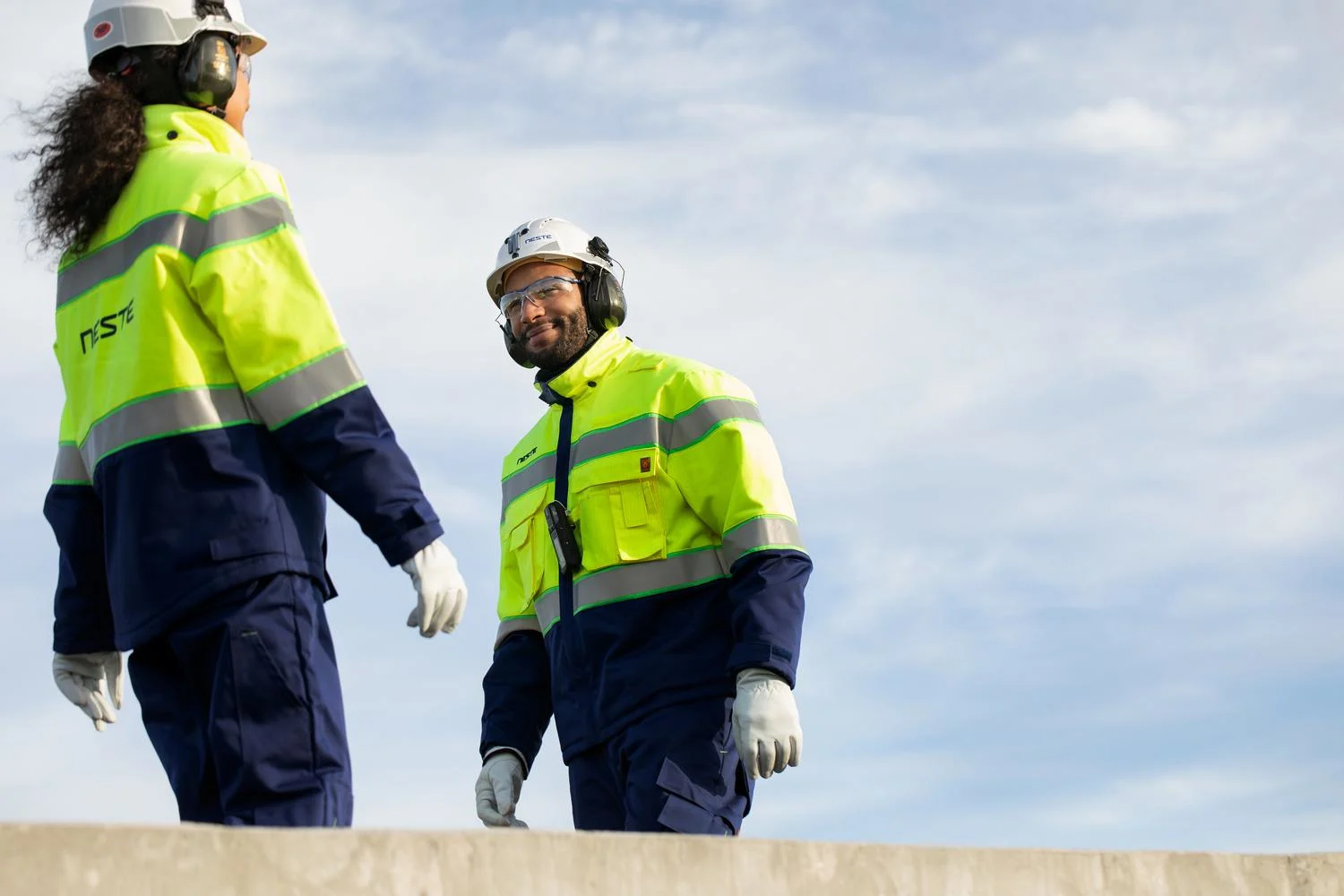
We ensure that contractors are able to work safely and are informed of any risks related to the work conditions. This is ensured through various audits, contractual safety requirements, and personal protective equipment and safety policies. A written risk assessment is always jointly prepared for high-risk work, agreeing on the measures required for safe work. We ensure through training and permit practices that work is scheduled correctly and all workers know the hazards related to the conditions and working practices.

Life saving rules
Neste has five Life-Saving Rules. We do not accept any deviations from safety instructions, rules or working procedures. All of the factors that influence safety and quality are especially important during a turnaround because there is a lot of work to be done by a large group of people from several countries.
Safety is always a joint effort and relates to us all. Together we can keep everyone safe.
Working at Heights
Work in high places means working in any area with an unprotected side, edge or hole that is 2 m or greater above a lower level or there is an unusual possibility of injury if a worker falls less than 2 m.
Before starting the work in high places, risks must be assessed and work carefully planned. Rules of thumb in planning are:
Avoid work at height if reasonably practicable
Prevent falls by using either an existing place of work that is already safe or the right type of equipment eg. scaffolding
Minimize the distance and consequences of a fall by using the right type of falling arrestor and safety harness
Falls and falling object are one of the biggest causes of workplace fatalities and major injuries. Therefore you must always protect yourself from falling at heights.
Confined spaces
Confined space is a fully or partly enclosed space which is not designed for human occupancy and could contain hazardous substances or conditions.
The atmosphere inside a confined space could be lethal. Hazardous conditions include risks such as drowning, engulfment, falling, fire, abnormally high or low temperatures or electrocution (surrounding electrically conductive structures). A confined space also has limited or restricted means for entry or exit and could complicate emergency response. Entering a confined space even partly without proper precautions and authorization could cause serious injuries or death. Therefore you must always obtain entry permit and verify atmospheric gas testing before entering a confined space. Also always follow safe work practices described in the permit.
Equipment isolation
At simplest, equipment isolation can mean disconnecting the electric power cord plug from the wall socket before carrying out maintenance work on the equipment.
Equipment isolation ensure that we do not mix or leak unwanted energies that might cause severe damage.
In our operations we need to manage and isolate several different kinds of hazardous energies such as hazardous chemicals, heat or pressure. All isolations require specific procedures, marking and personal protection. Non-compliance with the procedures could lead to a severe incident such as injury, leak or product mix. Therefore you must always verify that energy is isolated properly and protect yourself and the environment from the hazardous energy.
Work permits
Without proper planning and risk assessment all work might cause a hazardous situation. This is why Neste requires a work permit for all maintenance work even if it is a low risk work.
Neste stores and processes large quantities of hazardous substances including flammable and toxic materials and runs different kind of hazardous activities. The potential for serious incidents is clear. To prevent such incidents it is vital that we have effective management of hazards including the use of safe systems of work.
All operations at Neste have appointed authorized persons who can issue permits to work.
Permit to work is an essential part of the task risk assessment process.
Starting a work without proper authorization could lead to a all kinds of severe incidents. Therefore you must always obtain a work permit for maintenance works and follow the safe work practices described in the permit.
Traffic hazards
Traffic hazards concern us all. It is important that we keep safe while travelling.
We travel to and from work, for business trips and during our spare time. No matter what means of transportation we use we need to be aware of the risks and distractions that might occur. At Neste we pay extra care in ensuring that we always use the safety belt and keep our attention and hands free for safe driving. To come late is a far better option that compromising safety while on the road. At our production sites the traffic rules are stricter than the law requires as we have many elements, including all people, to protect in this high risk environment. We keep to speed limits assigned.
Last minute risk analysis
Consider before you start:
What are the job steps?
What are the risks in different steps?
How can you carry out the job steps safely in correct order?
If you can't do the work safely, stop at once!