
Carbon footprint

A carbon footprint is a measure of the total greenhouse gas (GHG) emissions caused by an individual, event, organization, service, place or product. It is typically measured as tons of CO2 equivalent (CO2e) per defined function or unit.
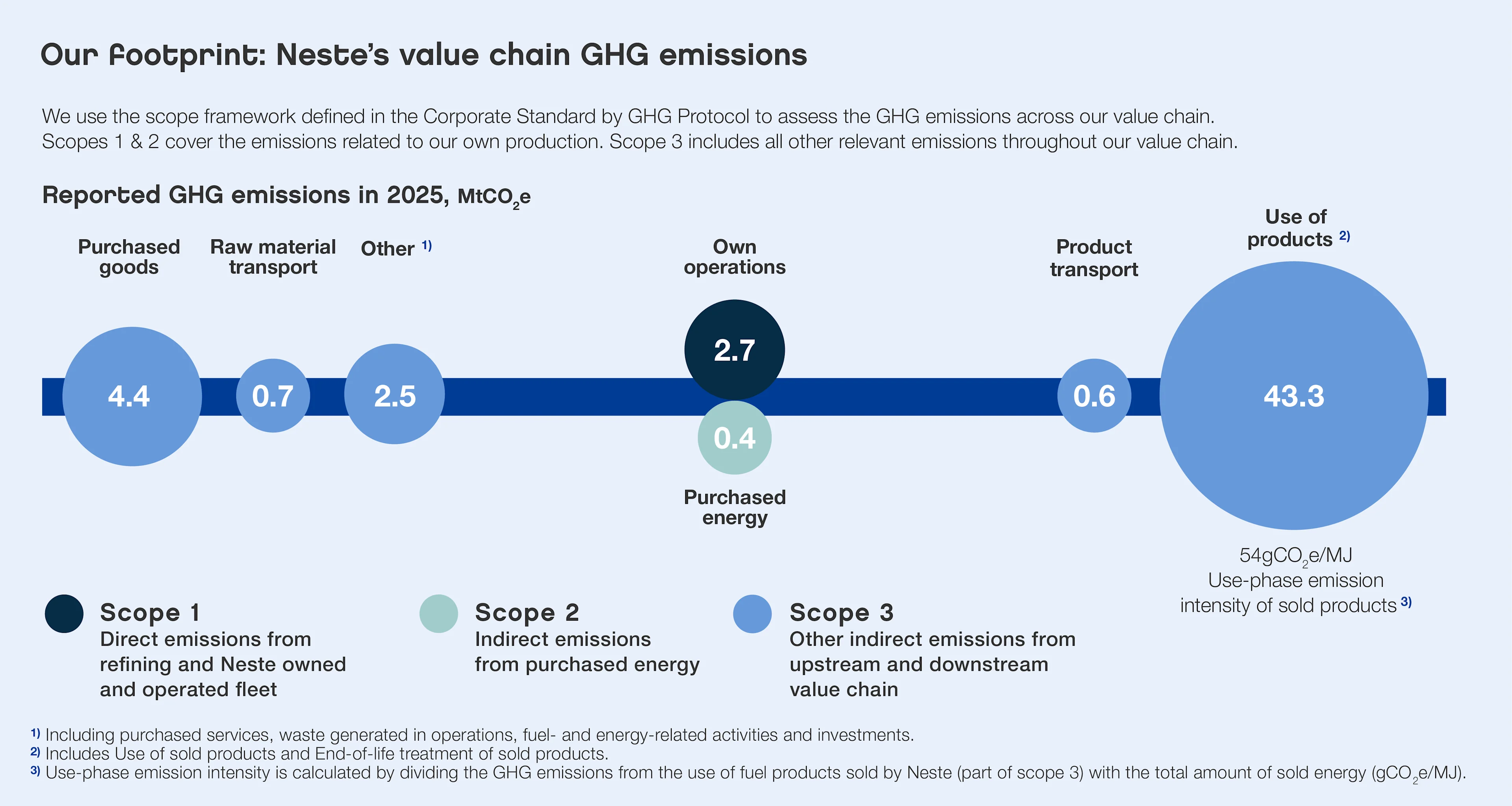
An organization’s carbon footprint refers to the GHG emissions caused over one year in its own operations, and often also across the value chain. Neste’s carbon footprint includes GHG emissions across the value chain, for example from production sites, logistics and sold products.
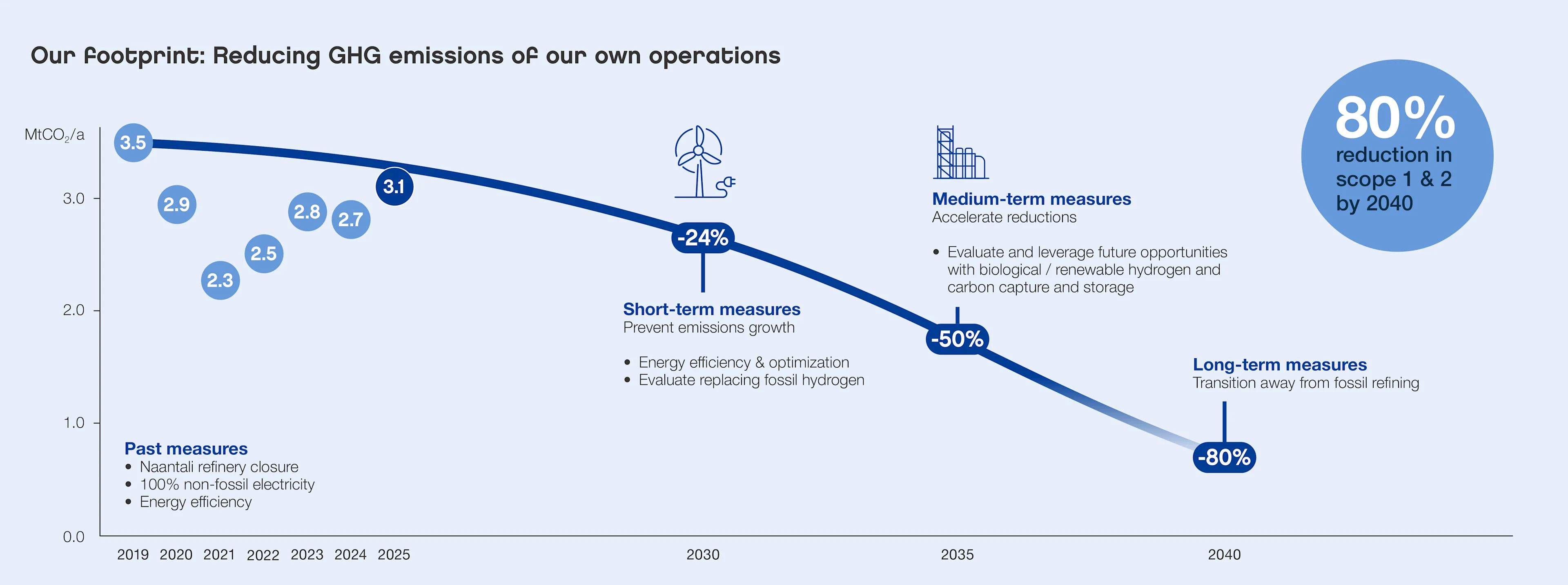
Our target is to reduce GHG emissions in our own operations (scopes 1 & 2) by 80% by 2040 compared to 2019.
We have identified and taken several measures to reduce GHG emissions in our production and operations (scopes 1 & 2).
In the short term we aim to mitigate emissions increases stemming from increasing our renewables production (sustain 24% reduction by 2030) by focusing on energy efficiency and electrification. To meet our other interim target (50% reduction by 2035) we aim to scale new technologies and evaluate alternative solutions to replace fossil hydrogen use at our refineries and capture carbon.
The most relevant scope 3 emission category for Neste is the use-phase GHG emissions of the products produced and sold by Neste. Our target is to reduce the use-phase emission intensity of sold products by 50% by 2040 compared to 2020. To meet the target, we will further increase the share of renewable and circular products in our product portfolio.
Neste is an example of how to manage and lead the transition from fossils to renewables. As the world’s leading producer of renewable diesel and sustainable aviation fuel, Neste is on a strong growth path, deliberately moving away from fossil-heavy strategies.
For other scope 3 categories, GHG emissions related to purchased goods, such as raw materials, purchased services, transportation and logistics are important topics for Neste’s value chain emissions. We continue to strengthen our capabilities across the organization and build our action plan for scope 3 together with our suppliers and partners.
Share this