Renewable solutions
5 minute read
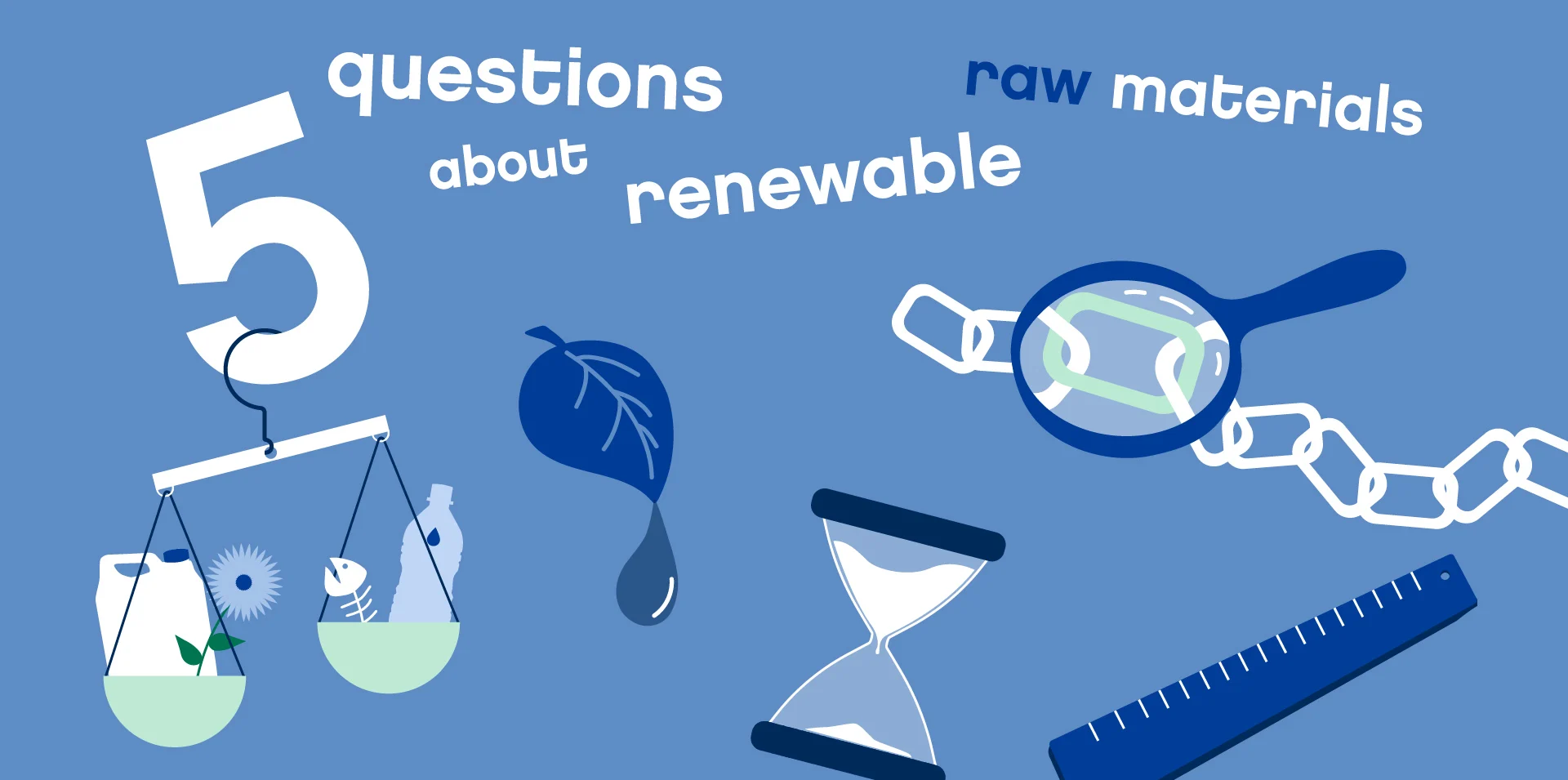
5 questions about renewable raw materials
As the global demand for biofuels increases, so does the need for a diverse, scalable, and traceable supply of renewable raw materials. In this article Neste’s raw material and regulatory experts answer topical questions about the evolving raw materials landscape, and the importance of innovation and clear regulations.
1. What are renewable raw materials, and how are they defined?
The definition of renewable raw materials in the fuels industry is guided by legislation, fundamentally starting with instruments like the EU Renewable Energy Directive (RED). The directive includes criteria for eligible renewable raw materials and encourages the use of specific biomass, such as waste and residue raw materials, and exploring new potential raw materials.
Today, Neste utilizes a wide variety of globally sourced raw materials, such as used cooking oil, animal fat waste, and various vegetable oil processing wastes and residues. Furthermore, we are exploring new future alternatives, such as lignocellulosic waste and residues and novel vegetable oils (NVOs), the latter derived from regenerative agricultural practices that can contribute to improvements in soil quality and biodiversity, while providing opportunities for farmers to generate additional income without expanding their farming to new areas.
2. How does Neste build its renewable raw material portfolio, and what role do advanced feedstocks play?
Rather than prioritizing one specific category over another, our raw material portfolio is guided by strict sustainability criteria, regulatory requirements, and customer preferences. We rely on a broad and expanding range of renewable raw materials to meet diverse needs.
A significant part of this portfolio development involves “advanced biofuel raw materials”, i.e. those listed in the EU RED III Annex IX Part A. This specific regulatory list highlights many challenging materials – like forestry residues and other lignocellulosics – that may require new types of processing technology to be used in larger scale. By incentivizing these advanced raw materials, regulations help companies justify the systematic investments needed to develop new technologies and to commercialize fragmented supply chains.
3. Are there enough renewable raw materials available globally to meet increasing demand?
In the short term, yes. But meeting the growing demand over the long term requires the biofuels sector to continue to diversify its raw material base beyond the currently utilized ones. Neste is actively working towards unlocking access to new raw material pools across multiple timeframes:
Short-term: We are expanding our advanced pre-treatment capacities to utilize lower-quality waste and residues, such as crude acid oils and tall oil fractions.
Short- to medium-term: We are developing novel vegetable oils (NVOs) through regenerative agriculture, which can add value by increasing yields on existing land or by restoring degraded agricultural land for cultivation purposes.
Long-term: Looking to 2030 and beyond, we are developing new technology pathways to process highly abundant lignocellulosic materials, such as forestry and agricultural waste and residues.
4. Why is traceability essential, and how is the authenticity of renewable raw materials ensured?
Traceability to the point of origin is a fundamental principle; by verifying the point of origin and the entire supply chain of raw materials, purchasers of these raw materials can monitor and check e.g. that relevant regulatory and company-specific criteria are consistently complied with. Tracking of the supply chain also helps identify and mitigate supply chain risks, while it enables engagement across the supply chain to drive positive impact. To combat supply chain fraud and ensure authenticity, Neste employs strict, multi-layered measures for which knowing the origin provides a basis.
Micro-level controls: We utilize rigorous supplier due diligence processes, manage sourcing operations locally close to the raw material origin, and perform continuous chemical laboratory analyses to monitor raw material quality and composition, for example.
Macro-level collaboration: We actively participate in certification working groups like ISCC’s and strongly support development and adoption of country-specific measures to ensure raw material authenticity or industry-wide digital tools, such as the EU's Union Database (UDB) for tracing liquid and gaseous transport fuels, to create further transparency across the supply chain and to ensure the integrity of the renewable raw materials and fuels.
5. How does regulation impact the scalability of renewable fuels?
Precise regulations and definitions are necessary for the industry. To effectively scale up new raw material pools and ensure investment security, the industry requires consistency, clarity, and stability from policymakers and regulators. Rather than focusing e.g. on assigning a specific category for single raw materials, raw material eligibility should primarily be determined by compliance with the sustainability criteria and other related requirements.
When legislation establishes clear, uniform standards and a long-term perspective, it secures a stable investment environment. With this stability in place, Neste and the broader industry are well-equipped and ready to respond, helping to support the global transition away from fossil fuels.
Insights for this article were provided by Neste experts Eveliina Vikström, Director, Feedstock Sourcing Growth & Excellence, and Inkeri Lilleberg, Head of Public and Regulatory Affairs, Feedstock.