Renewable solutions
5 minute read
Beyond the spec sheet: Real-world testing ensures Neste’s product quality
At Neste’s Engine Laboratory, a combination of extreme weather simulations and decades of expertise ensures that renewable fuels deliver a seamless drop-in performance.
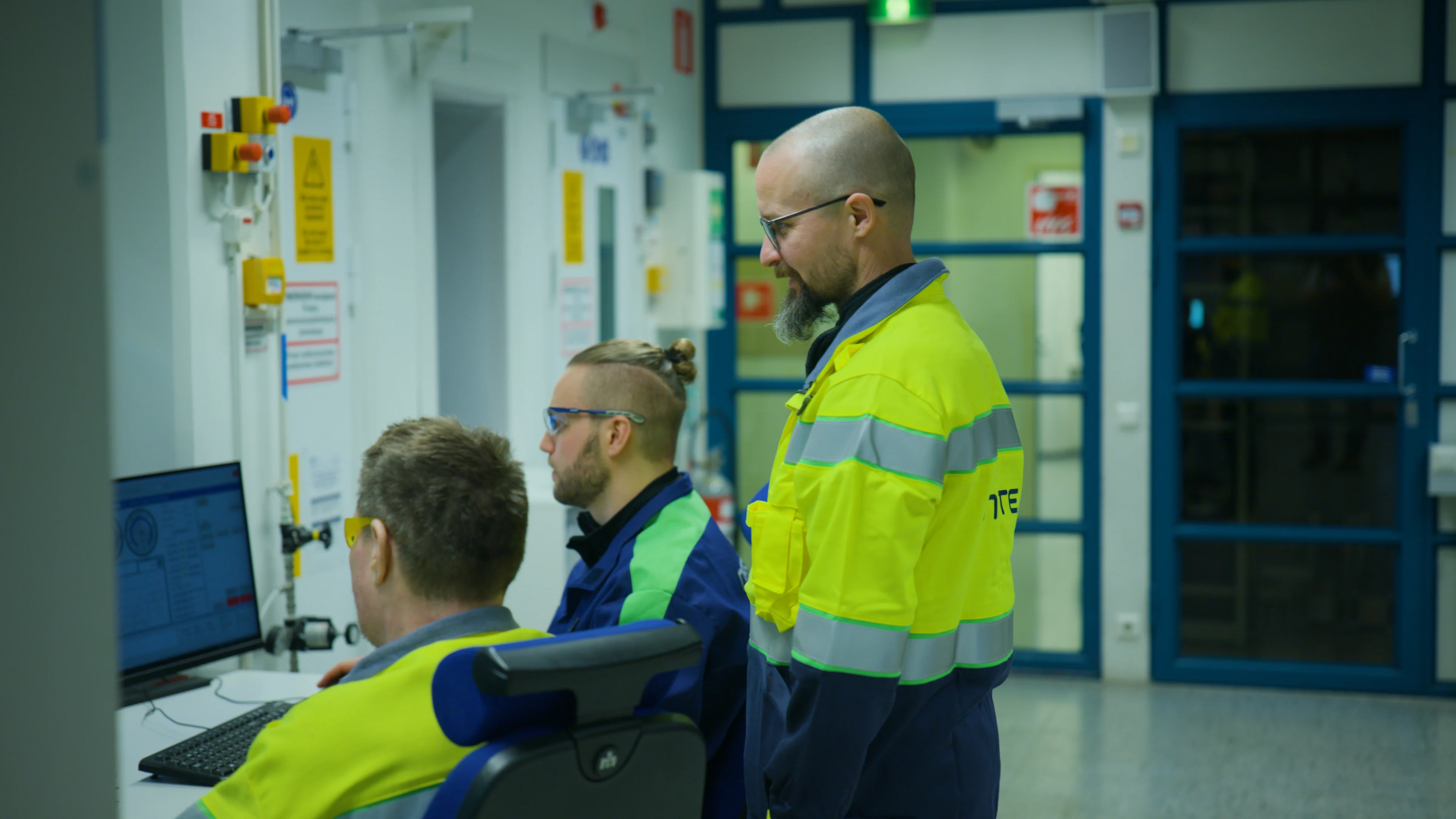
Within the Neste Porvoo refinery area in Finland, there is a facility where winter is permanent, and engines run for months without stopping. This is Neste’s Engine Laboratory, a critical proving ground established in 1959. While the facility has roots stretching back nearly seven decades, its modern mission is firmly fixed on the future: proving that renewable fuels can match, and often exceed, the performance of fossil counterparts.
For Neste, product testing isn’t merely a regulatory checkbox; it is the backbone of the company’s promise to customers. As the world's leading producer of renewable diesel (HVO) and sustainable aviation fuel (SAF), Neste takes a proactive approach to quality assurance.
“Since Neste is a pioneer in the field of renewable fuels, we carry a certain burden of proof,” explains Timo Murtonen, Team Leader of Product Testing at Neste. "We have to demonstrate that renewable products work flawlessly in any condition. That is why we view our own testing activities as absolutely vital.”
Simulating the extremes
The laboratory is equipped to handle everything from component analysis to full-scale vehicle testing. It houses engine test beds where engines can run under controlled laboratory conditions to generate data from short term and long term testing. However, one of the facility's most impressive features is its ability to summon the arctic.
“We have a test facility for passenger car-sized vehicles that can be frozen to almost -40 degrees Celsius,” says Murtonen. “This allows us to test the functionality of fuels in extreme cold and optimize their cold properties.”
This rigorous thermal testing is essential for dispelling myths about renewable fuels in colder climates. While traditional biodiesels (FAME) can struggle in freezing temperatures, the data collected by Murtonen’s team proves that Neste MY Renewable Diesel™ – with a different chemical composition and production process compared to biodiesel – maintains excellent cold properties, ensuring reliability even in the harshest Nordic winters.
The drop-in promise
One of the most significant advantages of Neste MY Renewable Diesel is that it is a drop-in solution. This means fleet operators can switch from fossil diesel to Neste MY Renewable Diesel immediately, without modifying their engines or investing in new infrastructure.
Validating this promise requires a massive amount of data. According to Murtonen, nearly 20 years of accumulated test data covers emissions, performance, material compatibility, storability, and cold properties. The verdict is clear: In addition to helping reduce transport sector climate impact*, the performance of Neste MY Renewable Diesel is at least as good as traditional fossil diesel, and in some areas, such as the cetane number and combustion cleanliness, it is even better.
*) Neste MY Renewable Diesel sold in the EU and Asia-Pacific is an HVO fuel fulfilling the EU RED sustainability criteria, including the requirement to provide at least a 50% reduction in greenhouse gas emissions over its life cycle compared to fossil fuel.
"The fact that the product has been extensively tested means that customers can safely deploy it without the risk of causing problems with their fleet."
“Without comprehensive testing, we wouldn't be able to make such a product promise,” Murtonen notes. “The fact that the product has been extensively tested means that customers can safely deploy it without the risk of causing problems with their fleet. It is a risk-free and already available solution for reducing transport sector's greenhouse gas (GHG) emissions."*
For customers, this translates to financial security. Transitioning to electric vehicles or other alternative fuel technologies often requires significant capital expenditure on new vehicles and charging infrastructure. In contrast, Neste’s testing confirms that current fleets can replace fossil fuels with Neste MY Renewable Diesel, using the existing distribution network.
Science vs. myth: Busting the biodiesel confusion
A major part of the laboratory’s work involves education through science. A common challenge the industry faces is the confusion between conventional biodiesel (FAME) and renewable diesel (HVO). Murtonen emphasizes that these are fundamentally different products with different standards.
“What is worth mentioning about renewable diesel is that it has practically the same hydrocarbon components as traditional fossil diesel,” Murtonen clarifies.
The lab’s storage tests have highlighted crucial differences. Traditional FAME-type biodiesels contain oxygen and can absorb water, which may promote microbial growth in the fuel, especially during slow fuel cycles. In contrast, Neste MY Renewable Diesel is hydrophobic; water separates and sinks to the bottom just as it does with fossil diesel, preventing microbial growth in the fuel and keeping the fuel system clean.
“The shelf life of our product is at least as good as traditional fossil diesel,” Murtonen adds. “In terms of the operation of exhaust gas cleaning systems, engine performance, or durability, we have observed no negative differences compared to fossil fuel.”
Building credibility through in-house expertise
The laboratory operates with a mix of standardized testing methods and specialized equipment developed in-house to meet specific research needs. While Neste collaborates with third-party research institutes and vehicle manufacturers for impartial field testing, the core verification happens in Porvoo.
“We want to have sufficient methods, equipment, and expertise through our staff,” Murtonen says, highlighting the importance of the team’s deep experience.
Ultimately, the engine laboratory offers something that cannot be bought: peace of mind.
“I believe that our own extensive testing capabilities bring credibility and reliability in the eyes of customers,” concludes Murtonen.