
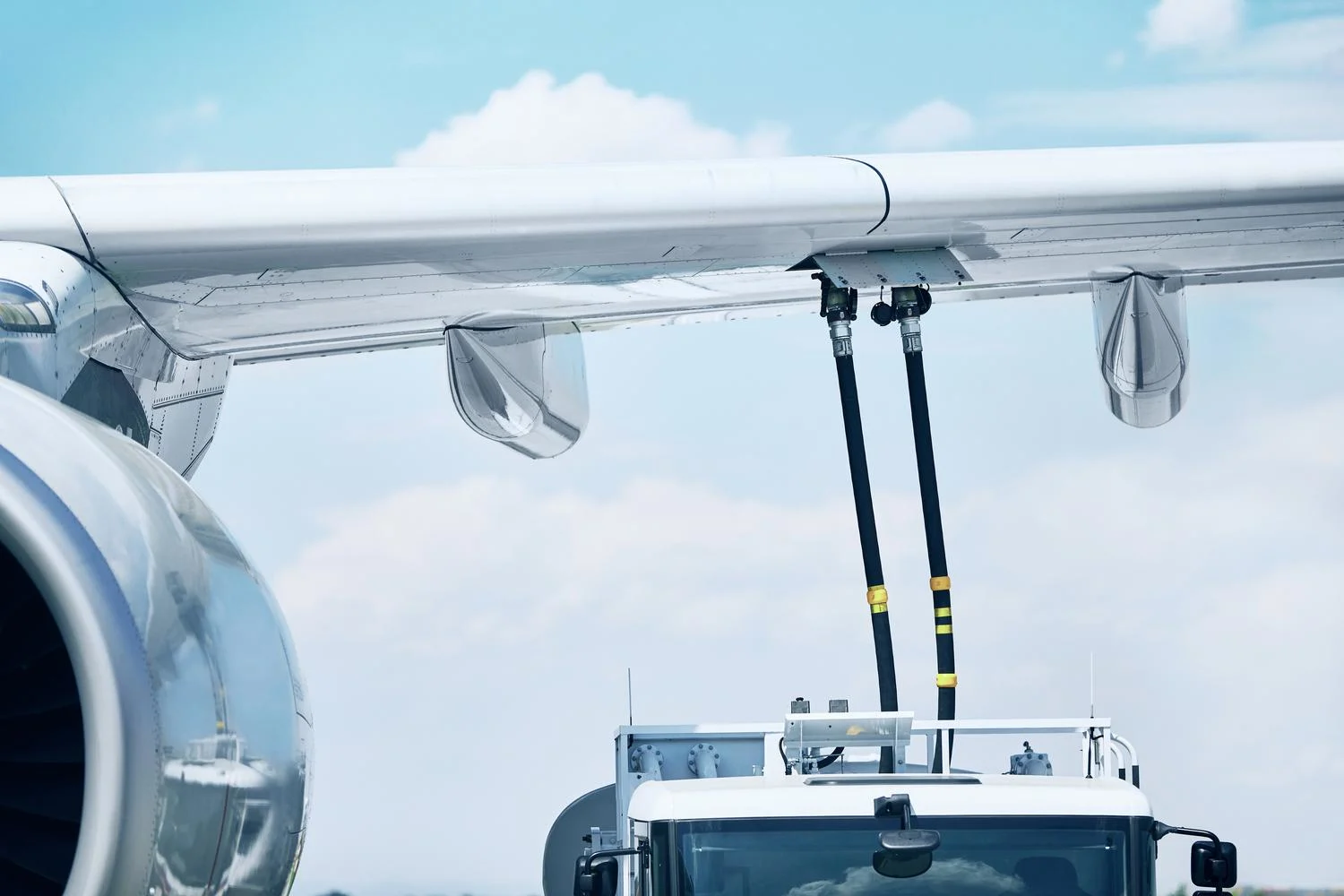
What is sustainable aviation fuel (SAF)?
Sustainable aviation fuel is a renewable aviation fuel and a direct replacement to conventional jet fuel. With its use, greenhouse gas (GHG) emissions can be reduced over its life cycle compared to using conventional, fossil-based jet fuel*.
What is Neste MY Sustainable Aviation Fuel™?
Neste MY Sustainable Aviation Fuel™ is produced from renewable waste and residue raw materials, such as used cooking oil and animal fat waste. Neste MY SAF is a lower-GHG-emission alternative to fossil jet fuel, that helps the aviation industry address its greenhouse gas (GHG) emissions and work towards its climate targets**.
Neste MY SAF is in commercial use by many airlines today and available at airports around the globe.
With the use of Neste MY SAF instead of conventional jet fuel, also the so-called non-CO2 impact of aviation, such as contrail formation, can be reduced***.
*)When verified to fulfill the mandatory sustainability criteria in accordance with e.g. ReFuelEU, CORSIA, neat i.e. unblended SAF, provides greenhouse gas emission savings over its life cycle when compared to fossil fuel. While SAF and fossil jet fuel release similar amounts of CO2 during flight, SAF’s life cycle climate impact is smaller than fossil jet fuel’s. SAF is certified for commercial use and can currently be blended up to 50% with conventional jet fuel.
**)Neat, i.e. unblended, Neste MY Sustainable Aviation Fuel fulfills the ReFuelEU Aviation criteria, including the requirement to provide at least a 65% greenhouse gas emission savings over its life cycle when compared to fossil fuel. While SAF and fossil jet fuel release similar amounts of CO2 during flight, SAF’s life cycle climate impact is smaller than fossil jet fuel’s. SAF is certified for commercial use and can currently be blended up to 50% with conventional jet fuel.
***)Due to the chemical composition of SAF, its use leads to reduction in soot emissions from combustion and formation of contrail ice crystals, demonstrated with 100% SAF; 2024. R. S. Märkl et al. “Powering aircraft with 100% SAF reduces ice crystals in contrails.
SAF production process

Step 1
Raw materials sourcing
Neste produces its SAF from renewable waste and residue raw materials such as used cooking oil and animal fat waste.
These renewable raw materials are sourced globally, for example from restaurants.

Step 2
Pretreatment
Once at the refinery, the waste and residue raw materials are pretreated to remove impurities.

Step 3
Refining
The chemical structure of the raw materials is then broken down and rebuilt as hydrocarbon fuel molecules.
This is done using a process called hydrodeoxygenation, which removes oxygen using hydrogen, and isomerization.

Step 4
Distillation
A final distillation step is done to create a high quality refined product that meets ASTM D7566 specifications for SAF.

Step 5
Delivery
Before use, SAF is blended with conventional jet fuel (up to 50% blend) and delivered to the airport as an ASTM certified jet fuel, ready to be used in existing aircraft.
How are emissions for SAF calculated
Neste MY Sustainable Aviation Fuel™ has lower greenhouse gas (GHG) emissions over its life cycle compared to conventional, fossil-based jet fuel* .
The life cycle climate impact is evaluated using established life cycle assessment (LCA) methodologies, such as CORSIA methodology. These calculations follow the "well-to-wake" principle, accounting for total emissions generated across the fuel's entire life cycle. This includes emissions from the collection and processing of raw materials, fuel refining, and all logistics associated with transport, as well as the emissions from the final use of the fuel. By comparing this total against the full life cycle emissions of conventional, fossil-based jet fuel, we provide a transparent measurement of the carbon emission reduction achieved.
*Neat, i.e. unblended, Neste MY Sustainable Aviation Fuel fulfills the ReFuelEU Aviation criteria, including the requirement to provide at least a 65% greenhouse gas emission savings over its life cycle when compared to fossil fuel. While SAF and fossil jet fuel release similar amounts of CO2 during flight, SAF’s life cycle climate impact is smaller than fossil jet fuel’s. SAF is certified for commercial use and can currently be blended up to 50% with conventional jet fuel.
Non-CO2 benefits of SAF
Aviation’s climate impact extends beyond carbon dioxide emissions. During flight, aircraft emit a range of other substances, commonly referred to as non-CO₂ emissions. These emissions such as soot, affect atmospheric chemistry, and can act as a basis for the formation of persistent contrail-cirrus clouds.
These clouds trap heat in the atmosphere, contributing to a net-warming effect that scientific research* suggests is as significant as the impact of CO2 itself.
Sustainable aviation fuel helps address this "hidden" impact due to its chemical composition. Unlike conventional fossil-based jet fuel, SAF contains practically zero aromatics. This results in cleaner combustion with significantly lower particulate (soot) emissions, lowering the likelihood of persistent contrail formation. Using SAF offers a dual-impact solution that helps reduce the climate impact of both CO2 and non-CO2 emissions**.
Read more on the subject here.
*)Due to the chemical composition of SAF, its use leads to reduction in soot emissions from combustion and formation of contrail ice crystals, demonstrated with 100% SAF; 2024. R. S. Märkl et al. “Powering aircraft with 100% SAF reduces ice crystals in contrails.
**)When verified to fulfill the mandatory sustainability criteria in accordance with e.g. ReFuelEU, CORSIA, neat i.e. unblended SAF, provides greenhouse gas emission savings over its life cycle when compared to fossil fuel. While SAF and fossil jet fuel release similar amounts of CO2 during flight, SAF’s life cycle climate impact is smaller than fossil jet fuel’s. SAF is certified for commercial use and can currently be blended up to 50% with conventional jet fuel.