Aviation, News and insights
8 minute read
Sustainable aviation fuel: a win-win for Europe’s competitiveness and resilience
Highlights
SAF is a drop in alternative to fossil fuel, compatible with existing aircraft, engines and fuel infrastructure.
It can help reduce Europe’s reliance on fossil jet fuel and the climate impact* of aviation.
Production is scaling up in Europe with SAF capacity set to exceed the EU minimum SAF targets under the ReFuelEU Regulation.
Europe has a clear pathway, with SAF mandates to 2050 yet policy is now needed to turn the EU’s early lead into a long-term competitive edge.
2.5% | 6% by 2030 | 3.2 million tonnes |
of global CO₂ emissions come from aviation. | EU minimum SAF share under ReFuelEU Aviation Regulation. | potential EU SAF production capacity by 2030, compared to projected demand of around 2.8 million tonnes. |
Aviation is an essential sector for Europe’s economy. It connects people, economies and businesses. According to the International Air Transport Association (IATA), in 2025, commercial aviation carried almost 5 billion passengers globally on 38.7 million flights.
Yet, aviation remains highly reliant on fossil fuels in Europe and globally. Of the 39.3 million tonnes of aviation fuel supplied at EU Union airports in 2025, 97.2%1 was fossil fuel. Globally the picture is even more challenging as fossil fuels represent 99.2%1 of aviation fuel use.
Aviation’s very high reliance on fossil fuel is not only a major climate challenge - aviation accounts for 2.5% of global CO₂ emissions2 - but is also a significant risk for EU energy security. Europe remains 95% dependent on imports for its jet fuel supply 3, highlighting the urgency to diversify fuel supply as Europe now confronts the challenges of this dependency.
Scaling SAF offers Europe an immediate opportunity to address the climate and supply risks while securing an industrial competitive edge.
Why SAF is the ready-to-deploy drop-in solution today
Sustainable aviation fuel (SAF) offers something other lower-climate impact* alternatives cannot currently deliver at a meaningful scale: reducing aviation's dependence on fossil fuels.
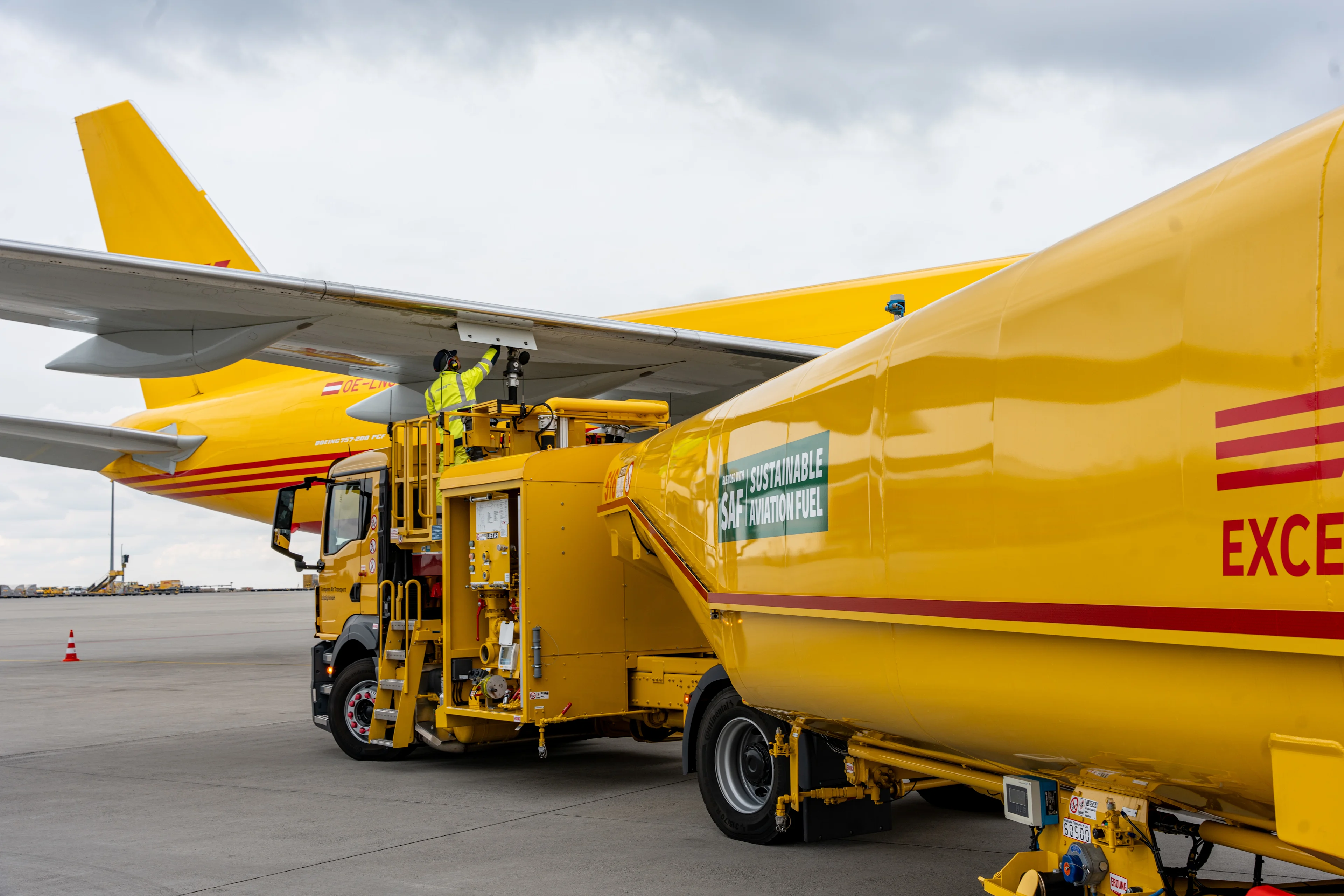
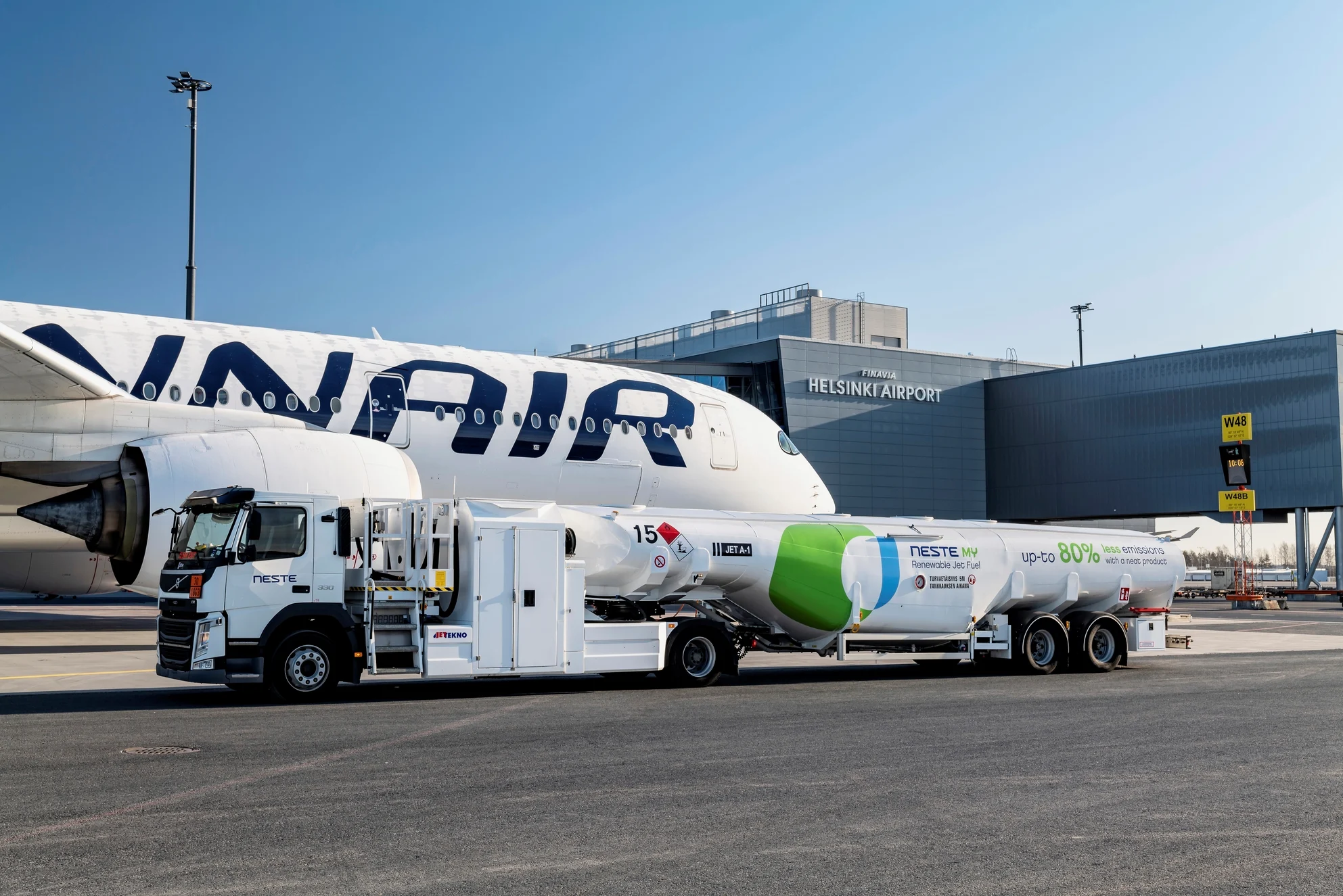
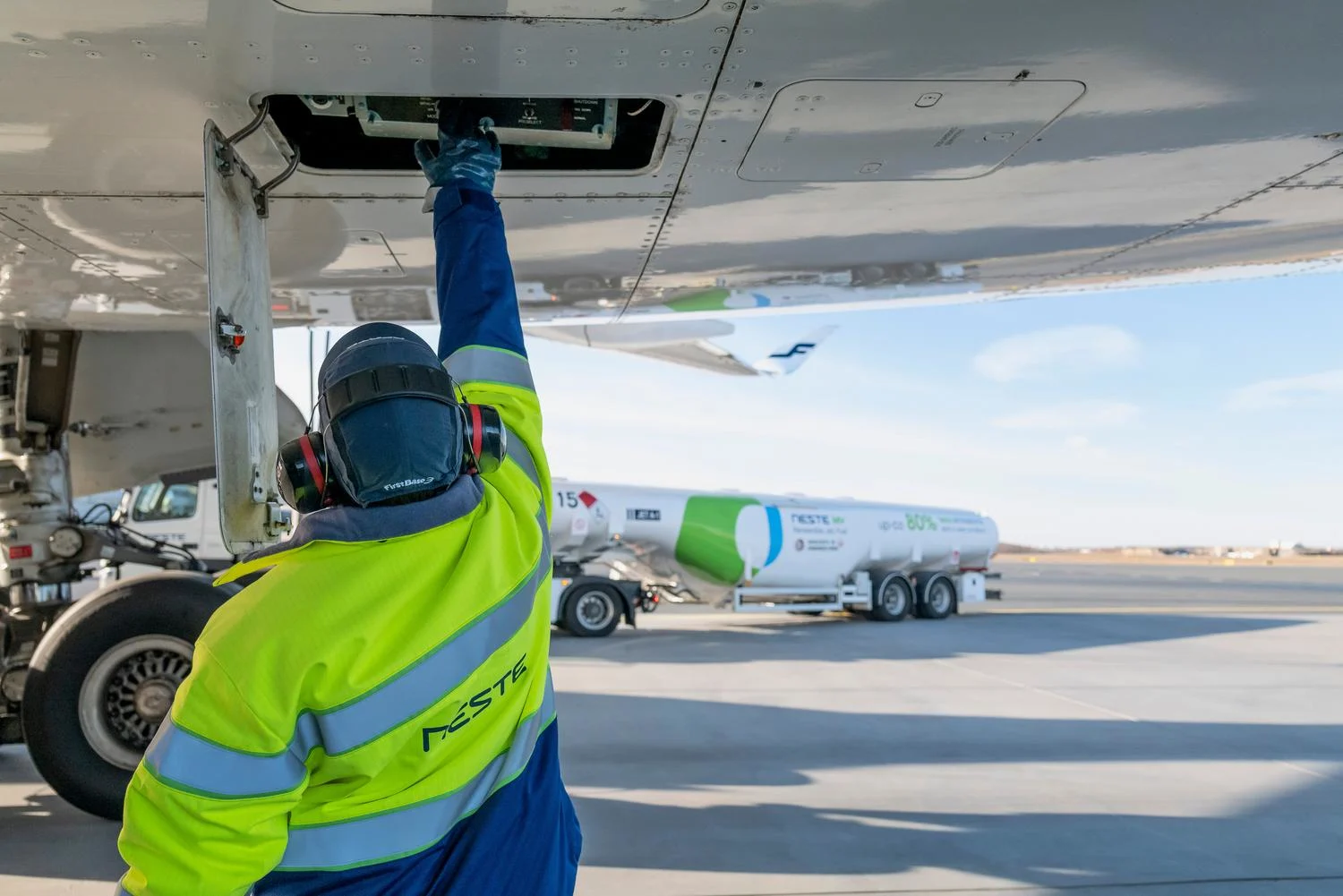
SAF, such as Neste MY Sustainable Aviation Fuel, is a drop-in solution. Once blended with conventional jet fuel in accordance with applicable jet fuel standards, it can be used in existing aircraft engines and fuel infrastructure, including transportation, storage and airport fueling system, without technical modification. It is already powering commercial and cargo flights globally.
By enabling the diversification of jet fuel supply, SAF can help strengthen energy security and EU resilience both for civil aviation and - in times of crises - for defense. For alliances like NATO, which prioritize operational resilience and energy security under its Climate Change and Security Action Plan 4, drop-in alternative fuels are increasingly recognized as a vital way to diversify vulnerable logistics corridors and secure critical mission readiness.
Why the SAF scale-up supports EU industrial competitiveness
As Europe’s conventional fuel industry navigates the global energy transition away from fossil fuels, the scale-up of SAF is a transformation opportunity which can maintain critical fuel refining capacity in the EU and secure long-term competitiveness.
The EU has already lost 20% of its refinery capacity over the past decade 5. The competitive pressure on the EU refinery sector is expected to increase. The International Energy Agency forecasts an overhang of conventional refinery capacity driven by expansion of fossil fuel refining capacity outside the EU and end-market transformation with electrification.6
While conventional fossil fuel refining faces this challenge, there’s a rapid need to scale production of renewable fuels like SAF to meet climate targets and reduce fossil dependency.
This is the opportunity, which should now be turned into a long term edge as renewable fuels scale globally.
What about the cost of SAF?
SAF is currently more expensive than conventional jet fuel although the gap fluctuates. The price of SAF is primarily driven by the higher cost of its raw materials compared to fossil fuels.
The production of fossil fuels benefits from decades of investments in scale, infrastructure and globally developed logistics networks. SAF, on the other hand, is produced from a range of diversified renewable raw materials, like waste and residues, which comes at a higher cost.
While SAF is more expensive, aviation’s reliance on fossil fuel comes at a price for Europe’s economy too—both through the costs of climate change in the long term and in the short term through recent supply shocks.
For passengers, the impact of using SAF on individual ticket prices remains very limited in the near term. Because SAF represents a relatively small share of the fuel mix, the higher fuel price translates to less than €1 to €3 on a typical short-haul European flight 7. Even as blending mandates rise toward 20% in 2035, the expected ticket impact on standard intra-European journeys is projected to remain manageable, typically around €5 to €15 7.
Meanwhile, SAF production is scaling up. Greater capacity, technological improvements and a broader raw material base offer clear opportunities to improve production economics over time.
Bridging mandates, capacity, and costs: Making the EU ETS work alongside ReFuelEU
The European Union has recognized SAF's potential through the ReFuelEU Aviation Regulation. From 2025, aviation fuel supplied at covered EU airports must contain at least 2% SAF, rising to 6% by 2030 before making another increase to 20% 5 years later, eventually reaching 70% by 2050. While these targets signal long-term policy ambition, such significant jumps between regulatory milestones present major market and scaling challenges for airlines, fuel suppliers, and producers alike.
The industry is already delivering the capacity needed for the first milestone. According to EASA's European SAF market analysis, EU annual production capacity already exceeds 1 million tonnes. Including facilities under construction, realistic production capacity could reach 3.2 million tonnes by 2030, comfortably covering the 2.8 million tonnes required under the 6% mandate 8.
However, meeting the steep jump to 20% by 2035 will require a massive new wave of capital investment. As SAF manufacturing capacity expands in anticipation of the milestone target, policy should support its full utilization to start reducing GHG emissions* and fossil fuel dependence for aviation.
One solution would be for ReFuelEU Aviation mandates to increase more progressively on an annual basis while maintaining the same overall level of ambition. Complementary economic drivers are also important to work alongside the SAF targets to bridge the price gap and encourage additional SAF use.
This is where the EU Emissions Trading System (ETS) plays a vital role. While putting a price on carbon is necessary, carbon pricing alone will not deliver the shift away from fossil fuels. The EU ETS must actively support SAF deployment. According to IATA, the 20 mil allowances currently reserved for SAF in ETS are estimated to cover less than 5% of airlines' ETS payments between 2024 and 2030.
To make carbon pricing truly work for aviation, the EU ETS must direct ETS resources generated from aviation back into strategic investments in reducing the climate impact of the sector. Recycling this revenue directly into closing the SAF price premium supports the global competitiveness of European airlines and adoption of SAF to reduce greenhouse gas reductions*.
The ongoing EU ETS revision offers a critical opportunity to fix this balance. Neste calls for:
1. Increasing SAF allowances to at least 200 million.
2. Maintaining regulatory support for all SAF types eligible under ReFuelEU beyond 2029.
3. Introducing stronger incentives for airlines to adopt SAF beyond minimum mandates.
By directing more ETS support toward SAF, Europe can accelerate emissions reduction, encourage private investment in refining capacity, and protect European industrial competitiveness.
The future is not up in the air
For more than a century, aviation has depended almost entirely on fossil-based jet fuel. ReFuelEU Aviation and a strengthened EU ETS provide a clear pathway to reduce that dependence.
Crucially, it also provides something producers and investors need: long-term certainty.
Building renewable fuel production capacity requires major investment. Producers need confidence in future demand before expanding refineries, developing technologies and establishing new raw material supply chains.
That certainty needs to be reinforced by an ETS framework that actively supports SAF deployment, rather than relying on carbon pricing alone.
Together, ReFuelEU Aviation and a stronger ETS can create a virtuous circle: predictable demand encourages investment, investment increases production, and greater supply, competition and technological progress can help reduce costs.
*) Neat, i.e. unblended, Neste MY Sustainable Aviation Fuel fulfills the ReFuelEU Aviation criteria, including the requirement to provide at least a 65% greenhouse gas emission savings over its life cycle when compared to fossil fuel. While SAF and fossil jet fuel release similar amounts of CO2 during flight, SAF’s life cycle climate impact is smaller than fossil jet fuel’s. SAF is certified for commercial use and can currently be blended up to 50% with conventional jet fuel.
1EASA European Aviation Environmental Report / Eurostat Transport Energy Balances (2025)
2 IEA Tracking Aviation / Our World in Data CO2 emissions by sector
3 Eurostat Energy Statistics: Imports of petroleum products (kerosene-type jet fuel)
4 NATO Climate Change and Security Action Plan
5 FuelsEurope Statistical Report on European Refining Capacity
6 IEA Oil 2025
7 Transport & Environment (T&E), Briefing & Fact Sheet (March 2026)
8 EASA: EU sustainable aviation fuel supply exceeds 2025 ReFuelEU Aviation target (Market Analysis)